 | Kids and Camping ??
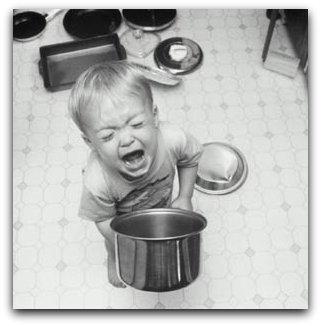
Getting away on a family holiday is as easy as picking a destination and packing, right? The truth is, whether it's camping, a week at the beach, or an overseas holiday - careful planning will make the holiday memorable for all the right reasons. Often, every member of the family will have different ideas on what they want from a holiday. Compromise may be the key to ensuring that everyone is happy with the final choice and planning now will save you a lot of time. Begin by writing a list of what everyone wants, and go from there. With babies and small children, consider the options that make a holiday easier and more enjoyable for them, as well as for you Camping Making a list of everything you will need is crucial - setting up camp and finding you don't have anything to boil water in for that much-longed for cup of coffee or tea is not a good start. With camping, little things can make all the difference for a comfortable holiday. For example, a transportable cot can keep babies and toddlers in a safe spot while preparing meals, but you can also go overboard and pack too much - another reason for a thorough list! Many campsites offer cabins as well as camping grounds and this could be an alternative for your family. Check the facilities a campsite offers. There are camping grounds with playgrounds, pools and all facilities but standards vary so it's important to check the site's rating, or go on recommendation. (The NRMA has a Tourist Park Guide which gives star ratings to most camp and caravan sites). Or you may want to get completely back-to-nature (not recommended for first-timers on their own)! Remember a few important things! There are heaps of things to look at and explore when you're bush camping, so I would keep toys to a minimum. A comprehensive source of information on national parks can be found at www.atn.com.au/parks.
|
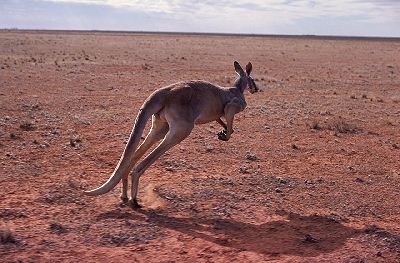 |
Outback SurvivalThe conditions in the Outback are often treacherous to the human body if an emergency occurs. Above all other measures, always notify someone of your journey, the route you are taking, when you expect to arrive and when you are departing - this way someone will always know if you are missing or late. There are a number of spare parts you can take with you on your trip to help you if damage occurs to the vehicle itself, but there are also a number of other things you can do to prepare for and survive such an emergency, including: * Areas around rock formations often catch water, as do trees - using plastic bags over the branches of non-toxic trees you may catch some water * Find shelter to protect your body from the elements, which are especially harsh in the Outback * Food isn't of great importance in a survival situation - unless no one knows you are missing. Searching for food not only uses much needed energy but you can also get easily separated from your vehicle, companions etc * If there is a salt lake nearby, after it has rained you can use tubing to siphon off the top 3mm which is fresh water * If you notice numerous animal tracks leading to the one location this may mean there is a waterhole or water source nearby * It is preferable to eat foods with a high water content as the body will take less to digest it. You can eat animals such as fish, reptiles, bugs, birds etc to sustain yourself until rescue * Top priority is find water, because while the body can last up to three weeks without food, it will only last 3 days without water * Try to make your location easy to see, this way search and rescue parties can locate you faster * Use clothing to minimize your exposure to both hot and cold temperatures * You can create fire by: using a tiny portion of petrol and light it with a cigarette; using wires from your battery to spark a flame (do this a decent distance away from the vehicle) or using steel wool over the negative terminal of a 6V battery then brush it against the positive terminal to create a flame which can light wood or other material * You should be able to obtain water from creek bed, even if dry - dig below the surface and you may find water ** Please note this is just a guide and in no way an exhaustive list |
Camping Essentials !
When you are going camping there are a number of basic camping gear essentials that go with any camping trip. These basics show up in most camping trips if you are camping without an RV or camping outside of a sheltered area, like a cabin. These essentials include items such as a tent, sleeping back, cooking gear, first aid kits, emergency supplies, lighting, fire making kit or heating source, knife, personal hygiene products. There are a lot of items that people view as essential which are not actually essential but make the camping experience more enjoyable.
Some of the items that can make your camping trip more enjoyable and for some people are considered essentials are things like Dutch ovens, which allow you to bake while you are camping. Other items are folding chairs, tables and cots to make sitting and sleeping around the camp easier on the body. Some people bring things like coolers for cold foods, and ice. The essential gear for camping depends on the type of camping you are doing and how rough you want to camp. There are some people who enjoy camping with just a sleeping bag and a small tent or tarp in case it rains but for the most part they sleep lying in their sleeping bag under the stars, cooking on a fire and enjoying the simplicity of nature. Others take it up just a step and have a tent and perhaps some fancier cooking gear while others insist that everything but a kitchen sink is essential to camping. One of the absolute essentials though is a first aid kit; no matter what type of camping you are planning on doing make sure that you have a fully stocked first aid kit. This also should include a snake bit kit; if you are planning on being anywhere in the deep woods or places where snakes are common. Another good thing to bring along is toilet paper, and a small shovel for creating a latrine some people may not find this an essential but for many it is. | 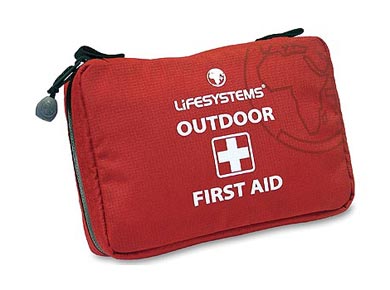 |
Quick survival tips before setting off !
|  |
Australia’s outback is vast and our remote wilderness areas have few towns and
facilities, often with large distances between them, so be aware and plan your trip.
1. When planning each day of travel spend some time to calculate how
long it will take to drive between destinations. Be realistic about how far you can drive in a day.
2. Inform family and friends or the local police of your travel plans.
3. Always carry a current road map.
4. Make sure your vehicle is in good working order and has been serviced recently.
5. Use a four-wheel drive vehicle on unsealed roads in remote areas.
6. If travelling to remote areas off major highways take extra food, water, fuel and tyres.
Do not overload your vehicle and never carry spare fuel inside an enclosed vehicle.
7. If you have trouble with your vehicle, don’t leave your vehicle because it will
provide you with shade and protection from the heat. Wait for help to come to you.
8. Hire appropriate emergency communication equipment, such as a satellite phone or an Emergency
Position Indicating Radio Beacon device (EPIRB).
9. Obey road closure signs and stay on recognized routes.
10. Fires in desert and bush areas can spread very quickly. If required, be prepared to evacuate the area immediately.
11. Australian wildlife and livestock often graze on the roadside and can stray onto the road.
Be very careful when driving at sunrise, sunset and at night, when animals are most active.
If an animal crosses in front of you brake gently do not swerve wildly to avoid it.
12. During daylight hours always drive with your headlights on low beam, as
outback conditions can make it difficult to see oncoming vehicles.
Aussie bush damper!
In colonial Today it is made with milk and self-raising flour. Salt is optional. BUSH DAMPER Bake in a hot oven (Or camp oven) 10 minutes, or until golden brown. Best eaten the day it is made. | 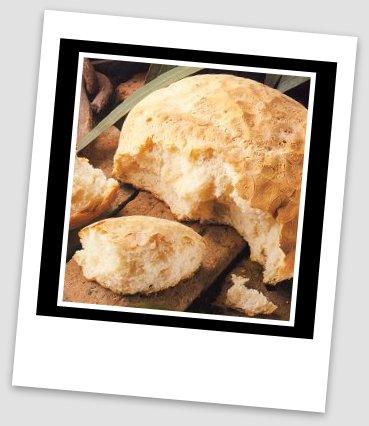 |
Bush Tucker Plants
Now if your stuck in the bush and you want ot impress your friends by keeping them alive for a few days because you
forgot to pack the food ( As there was no room for the beer) then hopefully you may come across a few Australian plants
listed below. Now im not talking about a four course meal here with all the trimmings but in this article the resources listed
below just might save your life and get you through to the next servo!
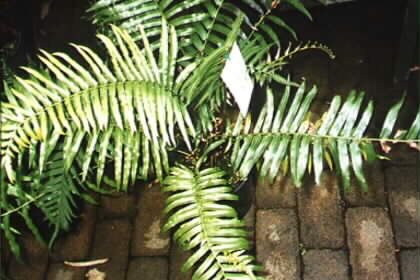 | Bungwall Fern: Botanical name: Blechnum indicum UsesThe tuberous root was soaked, roasted, and ground on grinding stones to make flour, and then cooked to make "johnny cake" |
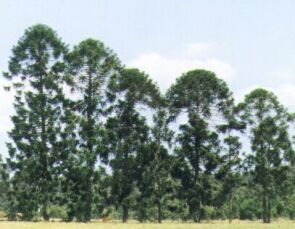 | Bunya Nut:Plant DescriptionBotanical name: Araucaria bidwillii This plant is a large tall tree to 40 m high with a straight trunk, prickly leaves, and separate male and female flowers. The female cones, up to 300 mm long and weighing up to 10 kg, contain the edible seeds. A large harvest occurs approximately every three years, January to March. UsesThe fruit is eaten raw, roasted, or pounded to flour to make a kind of bread. |
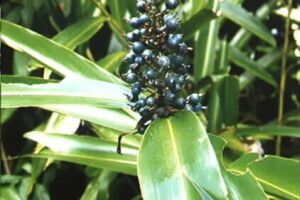 | Native Ginger:Plant Description Botanical name: Araucaria bidwillii This plant is a large tall tree to 40 m high with a straight trunk, prickly leaves, and separate male and female flowers. The female cones, up to 300 mm long and weighing up to 10 kg, contain the edible seeds. A large harvest occurs approximately every three years, January to March. UsesBunya harvest was a time of feasting and ceremonies. Aboriginal tribes headed for the Bunya mountains where each tribe had ownership of particular trees. The tribes gathered in designated meeting places and any hostilities were suspended. Fruit was gathered and taken home. |
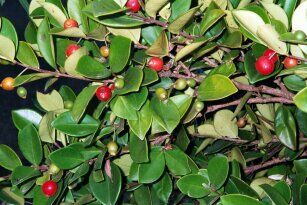 | Cedar Bay cherry:Plant Description Botanical name: Araucaria bidwillii This plant is a large tall tree to 40 m high with a straight trunk, prickly leaves, and separate male and female flowers. The female cones, up to 300 mm long and weighing up to 10 kg, contain the edible seeds. A large harvest occurs approximately every three years, January to March. UsesBunya harvest was a time of feasting and ceremonies. Aboriginal tribes headed for the Bunya mountains where each tribe had ownership of particular trees. The tribes gathered in designated meeting places and any hostilities were suspended. Fruit was gathered and taken home. |
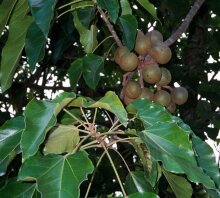 | Candle NutPlant Description Botanical Name: Aleurites moluccana This plant is a large rainforest tree with a spreading crown. It has large leaves; the juveniles are lobed. Clusters of 50 mm brown fruit ripen in summer. It is also found in South East Asia. UsageThe nuts can be poisonous when raw, causing violent vomiting. In 1999 the media reported that a child became ill after eating raw candlenuts in a park in Brisbane. However others have eaten them raw without ill effects. Roasting destroys the toxin in the oil which causes these effects. The roasted nuts are delicious, and are reported to be nutritious and high in energy from the fat they contain. They can be used to tenderise meat. |
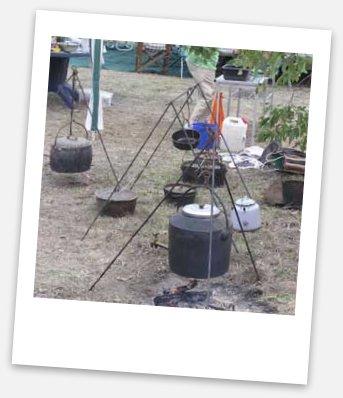 |
BUSH/CAMP OVENS
Camp oven cooking is part of Australian out back history. Over the ages drovers, shearers, and
Bushmen have used the
type of cooking has definite advantages.
With the advent of the four-wheel drive vehicle becoming so popular, more and more people are
becoming aware that their vehicle is able to travel on more than a sealed road, and are taking advantage
of this.
With this, a new adventure comes. Until a few years back few people were seen in some of these areas
of the Australian out back. The desert areas are now a destination that is not impossible to traverse for
these new explorers
All people have to eat, and part of the enjoyment of these trips is to sit around a campfire at night and
cook up a nourishing meal, and what better to do it in but a camp oven.
Preparing your new
A camp oven must be seasoned before it is used. Being of cast iron, this material is porous, and the
inside of the oven has to be treated so as to seal the surface.
Before you first cook in the camp oven fill with water and slowly heat but do not boil. Wash the new
oven and dry. Rub cooking oil (I like to use olive oil) inside and outside of the camp oven with a cloth
or paper towel. Repeat this 3 or 4 times over the next 2 days and then place in a hot oven at home and
bake it for about an hour applying more oil to the inside of the camp oven and don't forget the lid. The
oil will glaze on the surface and give it a protective coating. Before storing after use always give the
camp oven a good wash and then an oiling. This will stop rust forming. If this process of oiling is not
done before you use it, food particles penetrate into the cast iron and will go rancid while the camp
oven is not in use.
Too much flame will over heat the camp oven and will usually cause the contents to be burnt. Ideally
the cooking should be done on a bed of coals - with some coals spread on the lid to even out the
heating. With too much heat, this will cause evaporation of liquids inside the camp oven. When
cooking with the camp oven this way it is advisable to use a cake rack in the bottom or if this is not
available you could use some short clean tent pegs to stop the food being caught. A layer of alfoil over
the pegs or rack is something else to consider.
Another method to use the camp oven is to dig a hole deep enough to put the camp oven in the hole
with some room, near to your fire. Place some coals in the bottom of the hole but not to many , you only
want to warm the bottom of the oven. Once this is done, place more coals around the sides and on the
lid. This method gives a very constant heat and does not burn the bottom. This is the method I prefer to
use where possible but in some places it is impossible to dig a hole, as the ground is too rocky, so the
first method has to be used.
I hope these hints will assist you to having more enjoyable times
CAMPING CHECK LIST !
Cooking & Kitchen Check List ( Guide only)
Awning for kitchen area complete (p,p & r) Fridge cover & base
Bags to keep kitchen gear in, Freezer blocks
Billies - ones that nest inside one another Knife fork & spoons
Billy hooks or Fencing wire Light - with gas bottle or spare fuel
Bucket (s) Mantles
Camp oven Matches
Can-opener / Bottle opener/cork screw Mittens - to handle hot billies etc.
Chairs, Mixing Bowl
Kleenex Tissues, Plates- Bowls, Dinner plates etc.
Clothes pegs and line Portable Fridge or esky
Colander (rice) Portable sink stand
Cups or mugs Rubber gloves
Cutting board Scourers - Stainless or nylon type
Cutting or carving knife Screw on hanging hooks
Detergent and disinfectant Set of plugs for sink (for camping area)
Draining Spoon, Shower unit
Dust pan and brush Stove - with gas bottle or spare fuel
Equipment bags for Billies, frypans etc. Stove stand
Fire lighters Table(s)
Fly Veil ,Tea towels - two
Fold Up Toilet ,Toasting Fork
Food, Toilet Paper
Food box with fitting lid Tongs - Long
Frypan Tripod or "Y" poles and cross bar
Garbage bags and carry bags Washing up bowl
Grill - to go over open fire washing up cloth & brush
Jaffle Iron , Water Container(s) & Water
Fridge, Water purification Tablets
Esky
Accommodation Equipment
Air mattress, Peg Puller
Camping mat, Pillow
Self Inflating Mattress, Repair Kit for mattress
Self Inflating Mattress, coupling kit Sleeping Bag
Door Mat for tent Swag
Dry Bag for swag (keeps it clean and dry) Tarp to go under tent
Dust Pan and brush Tent c/w poles, ropes and pegs
Hammer ,Tent awning
Light and spare batteries
KNOW YOUR SNAKE'S ! !
It may just save your life one day? The number one question the doctor will ask you if your ever get bitten by a snake is " What kind of snake was it?" now most people who live in the city wouldnt know a snake if it bit them (pardon the pun) but it's true and your best chances of survival is to know your snake! I have put a few photo's below of the most common snake's you may encounter in the bush especially around Victoria and N.S.W. & S.A. but they can be found in other states as well . Always remember trendsetters never ever approach a snake in the wild and always keep your site clean as a dirty site will encourage rats and rats will bring snakes! If you have to a good tip is to leave a bowl of water a fair distance from your site as a thirsty snake wont think twice about having a little nip from you sink....
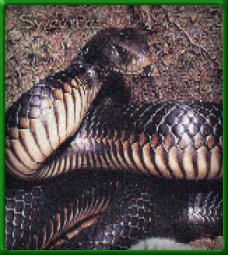 | The Red-Bellied Black snake is quite a poisonous snake. |
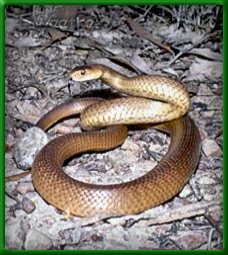 | The Eastern Brown snake is found along the entire length of the east coast of Australia, ranging from the tip of Cape York, along the coasts and inland areas of New South Wales, Victoria and South Australia across the Eyre Peninsula and reaches as far as half way across the west cost of South Australia. The colouring of this snake may be any shade of brown. Ranging in colour from pale to dark brown, russet, orange to nearly black. Young snakes have different colouring, a blackish head and banding on the nape. The body may be uniformly banded with dark cross-bands or may be irregularly reticulated by dark tipped scales. This snake is very dangerous and venomous. It kills its prey by venom and constriction. This my be either to kill the prey quickly or to prevent the prey from striking the snake while the venom takes effect. The snake feeds mainly on reptiles and small mammals. The average length of is 1.5 meters but it can reach lengths of up to 2.25 meters. It lays clutches of between 10 and 35 eggs. |
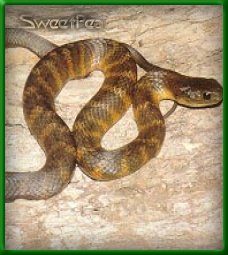 | The Tiger snake Notechis scutatus is usually quite timid and will retreat when approached. Despite their name, they do not have any stripes. The belly is usually a pale yellow, grey or white edged with black along the scales. The head is blunt and quite broad. Tiger snakes can grow between 1 metre to 2.1 metres. The male species is much larger than the female and also have larger heads. They feed mainly on small mammals and birds. Female litter sizes have been recorded as high as 126, and the litter size is often related to female body size. The highly toxic venom is produced in large amounts. The venom is mainly neurotoxic affecting the nervous system. It can also cause damage to muscles. |
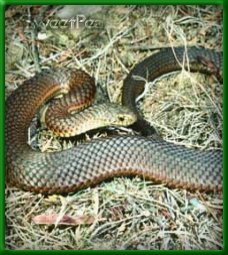 | Copperheads are the hardiest of the highly venomous snakes, actually preferring a cold climate. They are the last to become dormant in winter and the first to resume activity in spring. The biggest copperheads are found in Victoria, SE South Australia, and Tasmania. Copperheads are not easily aroused but they are undoubtedly capable of inflicting a fatal bite on humans, although its strike often misses. They average in length from 1.3 to 1.8 meters. The appearance of the Copperhead is a narrow head, with a heavy build. They either have grey, brassy, copper, russet, chocolate or black on their back, with cream, yellow or red along the sides. The light scales above its lips often give striped appearance. The belly is a yellowish cream or grey. The young usually are in litters of around 10-20. |
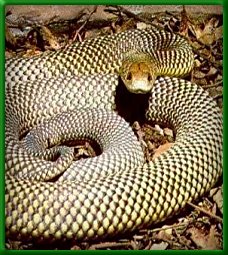 | Mistaken identity in the case of the Mulga snake could easily cost the life of a bite victim. They have a broad flat head that is slightly distinct from the neck. Their back is most often copper but varies from light brown to russet, dark olive brown or chocolate. The belly is pinkish or yellowish cream and sometimes has pink or orange blotches. The young hatch from eggs in clutches of 10-20. The Mulga snake is the most massive of the venomous Australian species and its output of venom is the greatest of all. It doesn't rank high in toxicity, but the volume delivered in a bite often increased by a chewing action makes the snake extremely dangerous. |
